What is kept, archived, and deleted
What archiving and deleting do to each kind of record in EDOS, from forms and responses to contacts and chats, and what support can bring back.
Before you start
- Archive always means "hide from the working list, keep the record". You can restore an archived item yourself.
- Delete in EDOS almost always means the record stops appearing for everyone on your account, while the underlying row is retained. It is not something you can undo from the product. Documents are the exception: their file is permanently deleted 30 days after you delete them.
- Nothing here changes who can delete what. Any member can archive and delete the records they can open; see Roles and permissions.
Forms and responses
Forms have Active and Archived tabs on the Forms list. Archiving a form takes it off the Active tab and stops it appearing in pickers; you can unarchive it from the Archived tab at any time. Archiving is the safe choice for a form you may reuse next year.
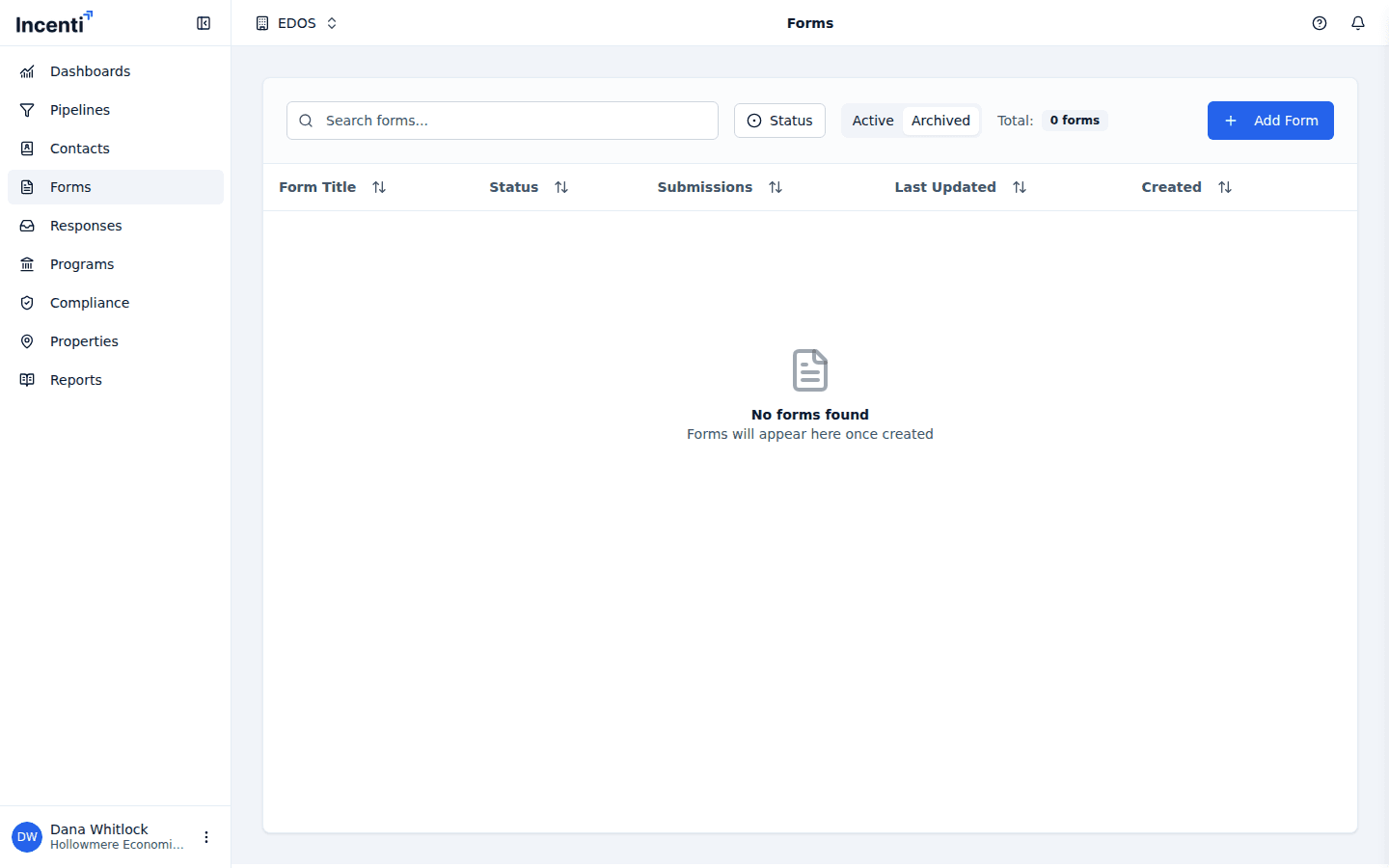
Deleting a form or a response removes it from every list for everyone on the account and cannot be undone from the product. A deleted form's responses go with it. Export anything you need first — see Publish and export a report for report exports and your response export options on Review a response.
Reports and dashboards
- Reports cannot be deleted. Archiving is the only way to take one off the list, and you can unarchive it whenever you like. Exported PDFs and CSVs from a report are separate documents with their own Active and Archived tabs.
- Dashboards can be deleted. The dashboard disappears for everyone on the account, along with its charts, filters, and saved KPIs. There is no Archived tab and no undo in the product — ask support if you deleted one by mistake and need it back.
Documents and files
Deleting a document removes it from the Documents table for everyone on the account at once. Its file is permanently deleted 30 days later. Files are private: they open only through Incenti, for signed-in users who can see the record, so there is no public link to keep working. See How files are stored and who can open them.
Report exports are documents too and follow the same rule. Files that respondents attach to a form stay with the response. A file removed from an answer, or left in a form draft untouched for 90 days, is cleaned up automatically. See Upload and manage documents.
Users
Disabling a user blocks their sign-in immediately and frees any seat they held. Their name stays on the records they created, and an admin can enable them again later.
Deleting a user is different and is worth avoiding:
- The user is removed from your Users list and can no longer sign in.
- Their email address can never be added to the Incenti Portal again, on your account or any other. Adding it returns "User already exists".
If someone may come back, disable them instead of deleting. See Invite and manage users.
Contacts, organizations, and opportunities
Deleting a contact or an organization removes it, and the links hanging off it, from your account's lists. Re-importing a CSV that contains the same email address brings that contact back with its history rather than creating a second record — which makes a CSV re-import the practical way to undo a contact deletion.
Deleting an opportunity removes it along with its tasks, notes, metric values, and links to responses and documents. The responses and documents themselves stay; they simply stop being connected to that opportunity.
Notifications and assistant chats
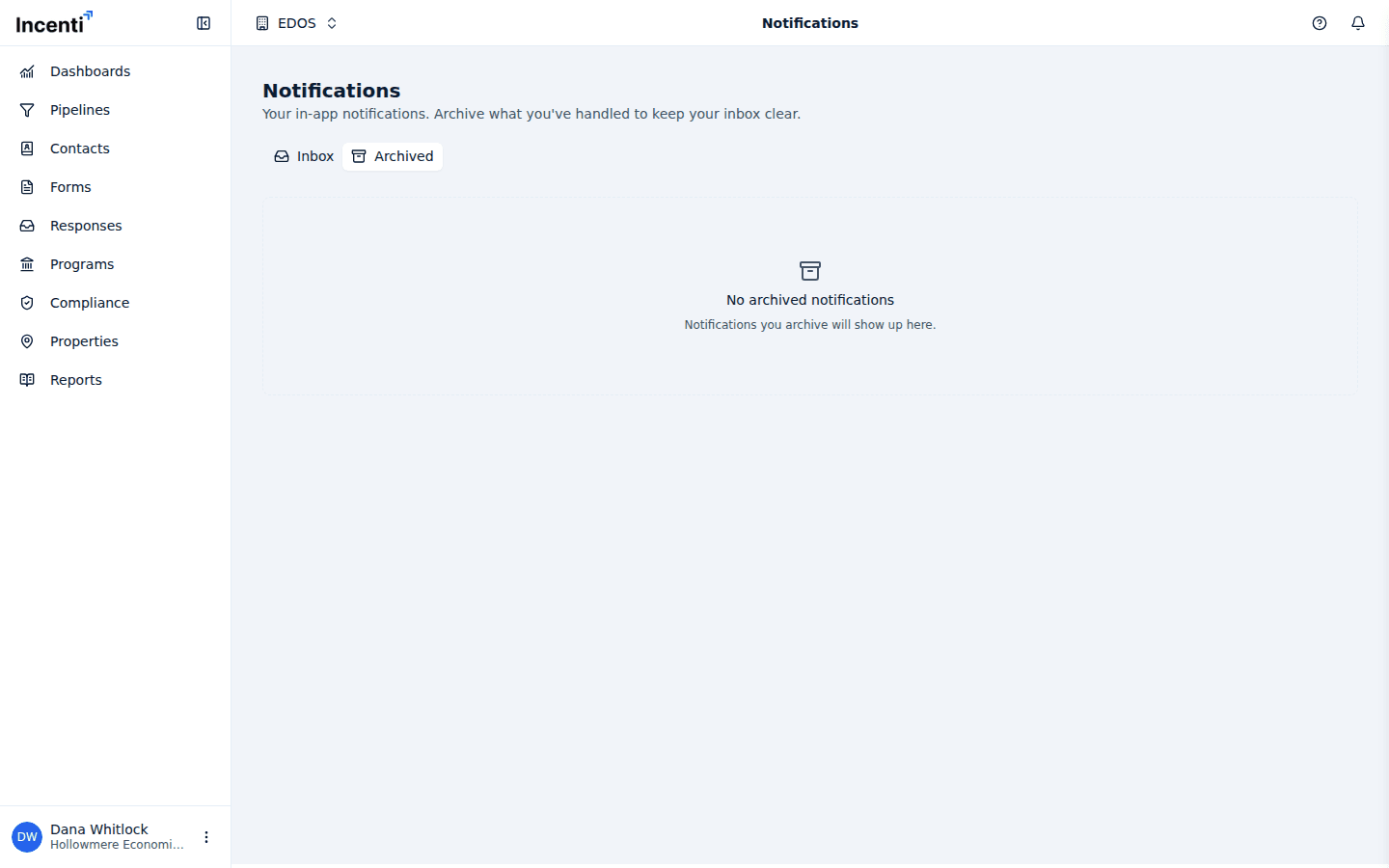
- Notifications are never deleted. Archiving moves a notification between the Inbox and Archived tabs, and you can move it back. There is no clean-up job and no retention window — your archive keeps growing.
- Agent conversations are kept so your earlier threads still work months later. In Chats, deleting a conversation removes it for everyone in it.
What support can restore, and closing an account
Contact support@incenti.co if you need something back. Because most deletes are not purges, support can usually recover a deleted dashboard, document, contact, opportunity, form, or response, and can free an email address blocked by a deleted user. A deleted document can be recovered only within 30 days of deleting it; after that its file is gone. Tell them the record's name and roughly when it was deleted.
Closing an account is an Incenti operation, not a setting on your account page. Email support@incenti.co to request it, and export anything you want to keep first.
Common questions
Q: I deleted a document. Is the file really gone? A: The document disappears from the Documents table at once, and nobody can open it from Incenti. The file itself is permanently deleted 30 days later. Within those 30 days support may be able to recover it; after that nothing can.
Q: A colleague has a link to a file I deleted. Can they still open it? A: No. Links to files open only through Incenti, for signed-in users who can see the record. Once the document is deleted nobody can reach the file, and after 30 days it is deleted for good.
Q: I deleted a user by mistake — can I add them again? A: Not with the same email address; the Incenti Portal refuses it with "User already exists". Contact support@incenti.co to free the address, and disable rather than delete next time.
Q: Can I get a deleted dashboard back? A: Not from the product — there is no Archived tab for dashboards and no undo. Contact support@incenti.co with the dashboard's name and when it was deleted.
Q: Can I delete old notifications to clean up my list? A: No. Archiving is the only option, and archived notifications are kept indefinitely on the Archived tab.
Q: How do we close our Incenti account? A: Email support@incenti.co. Closing an account is done by Incenti, so export your data first.
Related
Last updated on